
About Rigel Institute of Maritime Studies
Rigel Institute of Maritime Studies, established in March 2020, enhances the skills of seafarers through specialized marine training. It aims to meet international standards and regulations for competent seafarers, offering state-of-the-art facilities and fostering a spirit of mutual learning in the rapidly evolving shipping industry. The institute contributes to the efficient transport sector, crucial for a country like India with significant maritime access.



Courses
The Services we offer

TRAINING FOR TRAINERS
AND ASSESSORS
TRAINING FOR TRAINERS AND ASSESSORS
TRAINING FOR TRAINERS
AND ASSESSORS
AND ASSESSORS
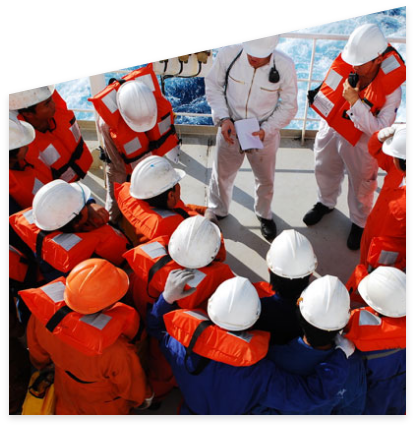
SCAFFOLDER
This theory course meets the requirement of skills and knowledge to undertake activities related to basic Scaffolding.
This theory course meets the requirement of skills and knowledge to undertake activities related to basic Scaffolding.
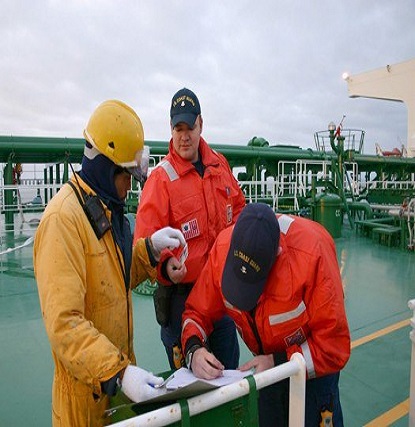
Company Security Officer - CSO
This training program provides comprehensive instruction on how to create and manage these plans, ensuring that
shipping companies are well-prepared to mitigate security threats and respond to incidents.
The course also focuses on threat identification, vulnerability assessment, and security risk evaluation. CSOs learn how to recognize potential security threats, assess vulnerabilities within the company's operations, and conduct thorough risk assessments.
This knowledge is crucial for devising robust security measures, procedures, and response protocols.
This training program aligns with international standards, adhering to the standard of competence outlined in the
Guidelines on Training and Certification for Company Security Officers, as set forth in IMO MSC/Circ.1154, and the IMO Model Course 3.20. It ensures that individuals who complete the course are well-equipped to meet and exceed the highest maritime security standards.
This course is beneficial for personnel involved in maritime security matters within shipping companies, including
Designated Persons Ashore, Quality Managers, Operations Managers, Superintendents, and Internal Auditors. By
providing them with the knowledge and skills needed to excel in their roles, the CSO course contributes significantly to the overall safety and security of maritime operations.
The STCW Company Security Officer online course is a vital training program that equips individuals with the knowledge and skills required to assume the role of a Company Security Officer (CSO) effectively. This course is integral to enhancing maritime security and ensuring the safety of vessels, crews, and operations.
FOOD SAFETY & HYGIENE (HACCP) LEVEL 2
Pest Control Cleaning & Disinfection Food Safety Management (HACCP) and Record Keeping Food Preparation, Service and Temperature Controls Food Safety Legislation
Food Contamination
Food Poisoning
Food Purchasing, Delivery and Storage
Personal Hygiene
Design and layout of Food Premises
Alumini
Students Testimonial


Manoj Kumar
I have found Rigel Institute course on google when i am searching my course Bridge and Engine room resource management course at that time Rigel Institute course website helps me to find the course and institute for the same.
Maniraj Shenava
I am searching course crowd and crisis management and my search ended on Rigel Institute course and the support which i got from them is tremendous.
Mohammad Raza
Rigel Institute help me to do my course online from Dubai they have very good support and team and courses available to do any time and any where. Thanks team Rigel Institute course.
Amit Patil
Rigel Institute course provides variety of courses and you can book your seat within few minutes with proper details they have good team and reputed institute tie up which will fulfil the requirements of seafarers. thanks for the support of team Rigel Institute course.
Rabeindra Yathushan
I have found Rigel Institute course on google when i am searching my course Bridge and Engine room resource management course at that time Rigel Institute course website helps me to find the course and institute for the same.
-
25+
Total Staff
-
10+
Total Courses
-
5+
Total Classrooms
-
2+
Total Offices
Join us
Error
Error
Error